-
 Apple refers botanically to Malus domestica. Throughout human history, it carries layered symbolism. In Greek mythology, the golden apple of discord cast by Eris ignited rivalry among the gods and ultimately led to the Trojan War. In Norse legend, the goddess Idunn guarded apples that preserved youth and vitality. In biblical tradition, the apple is often associated with knowledge and temptation, symbolizing awakening and choice. In Celtic lore, Avalon—the isle of apples—represented healing and eternal paradise. By the medieval period in Europe, apples became emblems of love, harvest, and the natural cycle of life. Its scent is crisp and juicy, blending natural sweetness with bright acidity, reminiscent of autumn sunlight and freshly sliced fruit. Innocent yet tempting, simple yet mythic, Apple embodies vitality, knowledge, abundance, and the power of choice.
-
 Aloe Vera refers to Aloe vera, native to North Africa and the Arabian Peninsula. The ancient Egyptians called it the “plant of immortality,” and legend holds that Cleopatra used aloe gel to maintain radiant skin. Records of aloe have been found in Egyptian burial sites, symbolizing protection and rebirth. Greek physicians and Roman armies valued it for wound healing, and it was said that Alexander the Great ensured access to aloe for his soldiers during campaigns. Through trade routes, aloe spread eastward and became part of traditional herbal medicine. Its scent is extremely subtle—fresh, watery, and slightly green with a faint herbal bitterness—clean rather than floral. It does not seduce like blossoms; instead, it protects and restores. From desert survivor to royal remedy, Aloe Vera represents healing, renewal, and inner resilience.
-
 Camellia refers to Camellia japonica. In East Asian culture, it symbolizes resilience and purity; Japanese samurai associated it with honor and decisiveness, while in Chinese tradition it represents modest elegance. In the 19th century, French writer Alexandre Dumas fils published La Dame aux Camélias, using the camellia as a symbol of love and sacrifice. The novel later inspired the opera La Traviata, further elevating the flower as an emblem of romantic tragedy. Camellia’s scent is soft and refined, with subtle floral notes touched by gentle tea-like freshness and green nuance. It does not overwhelm; instead, it conveys quiet strength and restrained elegance. From samurai honor to European romance, Camellia embodies purity, loyalty, and silent resilience.
-
 Peony refers botanically to Paeonia lactiflora. In Chinese history, it is known as the “King of Flowers,” symbolizing prosperity and nobility since the Tang dynasty. A famous legend tells that Empress Wu Zetian ordered all flowers to bloom in winter; only the peony refused and was exiled to Luoyang, where it later flourished and became legendary. In Japanese symbolism, peony represents bravery and honor, while in Western floriography it conveys romance and tender affection. Its layered petals resemble silk, and its scent carries a soft sweetness with rosy and fruity nuances, graceful yet expressive. From imperial gardens to poetic legends, Peony embodies abundance, dignity, and inner strength.
-
 Orchid belongs to the Orchidaceae family, with tropical varieties such as Phalaenopsis amabilis among the most iconic. In Eastern culture, orchids symbolize refinement and noble character; in classical Chinese tradition, they are one of the “Four Gentlemen,” representing humility and elegance. In ancient Greece, orchids were associated with fertility and vitality, and during the Victorian era, they became symbols of luxury and social status due to their rarity. In Singapore, Papilionanthe Miss Joaquim was chosen as the national flower, reflecting resilience and grace. Orchid scents vary by species but often carry a soft floral sweetness with creamy undertones, elegant and layered rather than overpowering. From Eastern virtue to tropical majesty, Orchid embodies dignity, independence, and refined inner strength.
-
 Okra Flower (Ambrette) refers to Abelmoschus moschatus, native to India and tropical Asia. In ancient Indian lore, its seeds were believed to be a fragrant gift from the moon goddess, symbolizing sensuality and gentle strength. Within Ayurvedic tradition, ambrette seeds were used to harmonize body and emotional energies, enhancing vitality and sensitivity. In Middle Eastern and Indian perfumery, they were treasured for their natural musky aroma and often called “plant musk.” Unlike animal musk, ambrette carries a soft fruity sweetness with subtle nutty undertones, warm and intimate like the natural scent of skin. In the 19th century, European perfumers incorporated it into fine fragrances to create smoothness and warmth. From ancient herbal rituals to modern perfumery, Ambrette represents intimacy, softness, and awakened sensual energy.
-
 Muguet (Lily of the Valley) refers to Convallaria majalis, native to temperate forests of Europe. In Nordic legend, the tears of a spring goddess fell upon the earth after defeating winter, turning into these delicate white bells, symbolizing renewal and purity. In Christian tradition, it is said that the tears of the Virgin Mary became Lily of the Valley, making it a symbol of humility and grace. In France, it is customary to gift the flower on May 1st as a token of good fortune and new beginnings. Its small white bells release a fresh, airy floral scent with soft green nuances, often described as the true breath of spring. As the natural flower cannot be easily extracted, perfumers recreate its luminous structure through artistry, preserving its timeless image of elegance and innocence. From mythic tears to seasonal blessings, Lily of the Valley embodies hope, purity, and gentle strength.
-
 Honeysuckle commonly refers to Lonicera japonica. In traditional Chinese herbal culture, it is valued for its purifying properties, and its name “enduring winter” symbolizes resilience and quiet strength. In Western symbolism, honeysuckle represents devoted love; in certain interpretations of Greek mythology, its twining vines were seen as signs of loyalty and attachment. During the Victorian era, it became a floral emblem of enduring affection. Its scent is sweet and nectar-like, carrying a soft honeyed floral tone with a delicate fruity nuance, warm yet airy like summer blossoms drifting in the evening breeze. From Eastern herbal wisdom to Western romantic symbolism, Honeysuckle embodies protection, devotion, and gentle sweetness.
-
 Geranium in perfumery primarily refers to Pelargonium graveolens, native to South Africa. In the 17th century, Dutch traders brought it to Europe during the height of maritime exploration, where exotic plants became prized treasures in royal gardens. In certain African traditions, geranium was believed to guard homes against illness and negative energy. During the Victorian era, it flourished on British windowsills and in orderly gardens, symbolizing comfort, sincerity, and rational affection. Its scent blends rosy florality with fresh green facets and a hint of minty brightness, often described as a clearer, greener counterpart to rose. Though sometimes called the “poor man’s rose,” it plays a vital balancing role in many classic fragrances. From African protective herb to European domestic staple, Geranium represents harmony between reason and emotion.
-
 Forget-Me-Not commonly refers to Myosotis sylvatica. A medieval European legend tells of a knight walking by a river with his beloved. Seeing delicate blue flowers by the water, he stepped in to gather them, but the weight of his armor pulled him into the current. Before disappearing beneath the river, he threw the bouquet to the shore and cried, “Forget me not,” asking to be remembered forever. Since then, the flower has symbolized faithful love and enduring memory. In 19th-century Germany and Austria, it became a token of friendship and promise, and in Victorian floriography, it represented sincere and unwavering affection. Its pale blue petals resemble fragments of sky, evoking purity and remembrance. The scent is soft and subtle with a light green nuance, like a gentle breeze across a spring meadow. From riverside vows to floral symbolism, Forget-Me-Not embodies memory, loyalty, and lasting emotion.
-
 Damask Rose, botanically known as Rosa damascena, is believed to have originated in ancient Persia and traveled along the Silk Road to the city of Damascus, from which it takes its name. Persian poetry often tells of the nightingale singing to the rose, wounded by its thorns, staining the petals red and symbolizing passionate, devoted love. During the Middle Ages, Crusaders carried the rose back to Europe, where rosewater and rose oil became treasured elements in royal courts and sacred rituals. In Islamic tradition, the rose is regarded as a flower of paradise, and the distillation of rosewater at dawn represents purity and blessing. Bulgaria’s famed Rose Valley later became one of the world’s most important production regions, harvesting petals at sunrise to preserve their richest aroma. The scent of Damask Rose is opulent and layered, blending honeyed sweetness with subtle spice, both tender and majestic. From Persian verse to sacred ceremonies and modern haute perfumery, it embodies love, sanctity, and timeless beauty.
-
 Carnation, botanically known as Dianthus caryophyllus, derives its name from the Greek word meaning “flower of the gods.” In Greek mythology, the goddess Artemis (Artemis) transformed the eyes of a shepherd into blossoms, which were said to become the first carnations, symbolizing love intertwined with sorrow and strength. During the Middle Ages, carnations were regarded as protective flowers, worn by knights as emblems of loyalty and courage. In Renaissance art, they appeared in religious paintings to represent maternal love and devotion. In modern times, carnation became the emblem of Mother’s Day, with different colors expressing remembrance and deep affection. Its scent carries a warm spicy floral character with a soft powdery nuance, delicate yet powerful. From mythic origins to chivalric honor and maternal symbolism, Carnation represents loyalty, protection, and enduring love.
-
 Arabian Jasmine, botanically known as Jasminum sambac, originated in South and Southeast Asia but gained its name through Arab traders who carried it along ancient maritime routes. In Hindu mythology, the god of love Kamadeva (Kamadeva) used floral arrows to awaken passion, and jasmine symbolized purity and desire. It was woven into garlands for deities and newlyweds, representing sacred and heartfelt love. In the Arab world, jasmine became known as the fragrance of the soul, blooming at night and releasing a rich sweetness believed to awaken true emotion and sincerity. In China and Southeast Asia, jasmine symbolizes gentleness and humility, often blended with tea to accompany daily life. When introduced to Europe, Arabian Jasmine became a cornerstone of white floral perfumery, shaping many iconic fragrances. Its aroma is creamy and sweet, both innocent and sensual, like white stars unfolding in a summer night. From divine love myths to nocturnal blossoms, Arabian Jasmine embodies devotion, intimacy, and emotional connection.
-
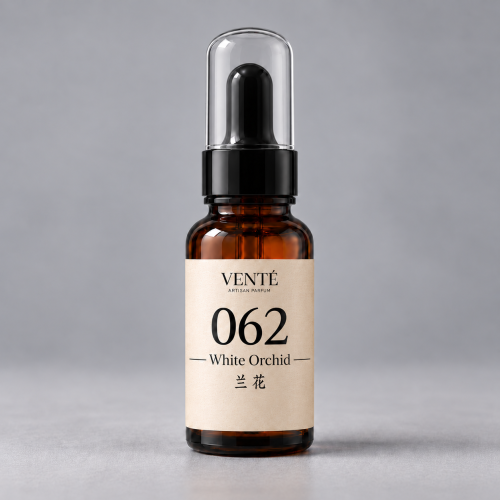 Orchid belongs to the vast and ancient botanical family Orchidaceae, one of the largest plant families in the world. In ancient Greece, orchids were associated with fertility and vitality, and the word “Orchis” reflected themes of life and creation. In Eastern culture, Confucius praised the orchid as the “fragrance of kings,” admiring its ability to bloom quietly in secluded valleys while maintaining noble elegance; in Chinese tradition, it is counted among the “Four Gentlemen,” symbolizing refinement and moral integrity. In Southeast Asia, orchids represent prosperity and blessing, often adorning royal palaces as emblems of wealth and grace. The 19th century saw “orchid fever” sweep through Europe, as explorers journeyed to tropical jungles in search of rare species, turning orchids into symbols of luxury and exotic allure. The scent of orchid is soft, creamy, and delicately powdery, both mysterious and graceful, like silk gently enveloping the senses. From ancient vitality to Eastern virtue and European opulence, Orchid embodies purity, nobility, and inner strength.
-
 Tulip, botanically known as Tulipa gesneriana, originated in the steppes of Central Asia and traveled westward along ancient trade routes into Persia and the Ottoman Empire. A Persian legend tells of a prince who, grieving the loss of his beloved, shed blood upon the earth from which crimson tulips bloomed, symbolizing passionate and faithful love. In the Ottoman court, tulips became emblems of refinement and prosperity, and the sultans celebrated illuminated “Tulip Nights” in palace gardens, honoring both beauty and the fleeting nature of life. In the 16th century, tulips reached the Netherlands and sparked the historic Tulip Mania, one of the earliest recorded financial bubbles, where bulbs were traded for fortunes, reflecting human desire and ambition. The scent of tulip is soft, watery, and gently green, like petals unfolding in morning dew—elegant yet restrained. From steppe legend to imperial splendor and economic history, Tulip embodies love, longing, and the delicate balance between beauty and desire.
-
 Iris, especially varieties such as Iris germanica and Iris pallida, derives its name from Iris (Iris), the Greek goddess of the rainbow and messenger of the gods. Wherever she descended from Olympus, irises were said to bloom, symbolizing divine communication and sacred connection. The ancient Greeks planted irises on graves, believing they would guide souls to the afterlife. In Egypt and Rome, iris roots were used in sacred rituals and noble cosmetics. During the Middle Ages, the iris evolved into the emblem later associated with the French fleur-de-lis, representing nobility, faith, and honor. Unlike many flowers, the fragrance of iris comes not from its petals but from its aged rhizome, known as orris root, which develops a soft, powdery, buttery, and subtly woody scent after years of maturation. From rainbow myth to royal insignia, Iris embodies spiritual insight, refined elegance, and the beauty shaped by time.
-
 Ginger lily (butterfly iris) commonly refers to varieties such as Iris japonica, whose petals spread like delicate wings. In Eastern symbolism, butterflies represent the soul and transformation; when the iris blossoms resemble fluttering wings, they are seen as spring spirits awakening the world. During the Middle Ages, irises were planted in graveyards to guide souls toward light, and the fleur-de-lis became an emblem of French royalty, representing faith and nobility. The scent of Butterfly Iris is soft, powdery, and lightly green, like mist drifting through a garden at dawn, refined yet mysterious. From rainbow legend to royal insignia, it embodies communication, transformation, and spiritual elevation.
-
 Rose d’Alexandrie traces its heritage to the ancient port city of Alexandria and is closely associated with the historic Rosa damascena. Legend tells that Queen Cleopatra (Cleopatra) once carpeted her palace floors with roses to welcome a Roman general, filling the air with intoxicating fragrance as a symbol of love, power, and seduction. As Alexandria stood at the crossroads of civilizations, roses traveled from Persia to the Mediterranean world, becoming emblems of royalty, devotion, and romance. During the Crusades, Damask roses were brought back to Europe, securing their central role in the history of perfumery. Rose d’Alexandrie is rich and opulent, layered with honeyed sweetness and subtle spice, both tender and regal, like golden sunlight illuminating ancient stone walls. From Egyptian courts to modern haute perfumery, it represents love, strength, and timeless allure.
-
 Tuberose, botanically known as Polianthes tuberosa, originated in Mexico and was revered by the ancient Aztecs as the “flower of the night.” Legend tells that the moon goddess scattered starlight upon the earth, transforming it into luminous white blossoms that release their richest fragrance only after sunset, symbolizing sensual power and nocturnal mystery. In the 16th century, Spanish explorers brought tuberose to Europe, where it flourished in royal gardens and aristocratic perfumes. Its intoxicating scent was considered so powerful that folklore warned young women not to wander near blooming tuberose at night, lest its aroma awaken hidden passions. In modern perfumery, tuberose is interpreted as lush, creamy, and opulent with a subtle spicy undertone, embodying both innocence and seduction, like moonlight unfolding in darkness. From lunar myth to courtly legend, Tuberose represents mystery, sensual awakening, and emotional liberation.
-
 Plum Blossom, botanically known as Prunus mume, symbolizes resilience and purity in Eastern culture. Legend tells that when the god of winter ruled the earth and all flowers withered, only the plum blossom dared to bloom against the snow, becoming the herald of spring. In Chinese tradition, it is one of the “Three Friends of Winter” alongside pine and bamboo, representing endurance and noble character. Folklore describes the plum blossom as a celestial maiden who descended to bloom in the coldest season to protect hope among humanity. Thus, it stands for elegance, inner strength, and renewal. In perfumery, its scent is interpreted as delicate, cool, and softly sweet with a powdery nuance, like a gentle fragrance carried in crisp winter air. From mythic guardian to poetic symbol, Plum Blossom embodies perseverance, purity, and rebirth.
-
 Neroli, botanically known as Citrus aurantium, symbolizes purity and marital blessing in Mediterranean cultures. In Greek mythology, the goddess Hera wore a crown of orange blossoms at her wedding, representing sacred union and fidelity, making the flower a traditional bridal adornment. During the Middle Ages, Arab traders introduced bitter orange trees to Spain and Italy, and the blossom’s fragrance became associated with royal perfumes and noble ceremonies. In Victorian times, brides wove orange blossoms into their wreaths to signify innocence, happiness, and abundance. In modern perfumery, orange blossom is interpreted as bright and luminous with gentle sweetness, blending citrus freshness with floral elegance, like sunlight warming white petals. From mythic weddings to contemporary classics, Orange Blossom embodies joy, purity, and heartfelt blessing.
-
 Narcissus, botanically known as Narcissus poeticus, takes its name from the Greek myth of the beautiful youth Narcissus (Narcissus), who fell in love with his own reflection and ultimately transformed into a flower by the water’s edge. Thus, narcissus symbolizes self-reflection and the dual nature of beauty. The ancient Greeks saw it as both a warning against vanity and a sign of awakening, as it blooms at the end of winter, heralding renewal and hope. In Eastern traditions, narcissus blossoms around the Lunar New Year and represents prosperity, elegance, and new beginnings. In perfumery, its scent is interpreted as green and slightly bitter floral, cool yet subtly sensual, like the clarity of early spring water. From mythic transformation to seasonal rebirth, Narcissus embodies awareness, renewal, and inner radiance.
-
 Lotus flower, often associated with aquatic blooms such as Nymphaea alba, carries poetic symbolism across cultures. In Greek mythology, a water nymph who fell in love with Heracles faded into sorrow and transformed into a floating blossom, making the flower a symbol of quiet longing and unspoken affection. In Chinese classical poetry, the lotus-like water lily is praised for its purity and graceful presence, celebrated as a noble bloom rising from clear waters. During summer, its blossoms drift gently among broad leaves, becoming a metaphor for elegance and tranquil character. In modern perfumery, Water Lily is interpreted as a fresh aquatic floral note with luminous softness, lighter and more sunlit than sacred lotus, reminiscent of petals touched by warm breeze over calm waters. From mythic waters to poetic gardens, Water Lily embodies serenity, subtlety, and natural grace.
-
 Lotus, botanically known as Nelumbo nucifera, is revered as a sacred flower in Eastern traditions. In ancient Indian mythology, the creator god Brahma is said to have emerged from a lotus growing from the navel of Vishnu, making the flower a symbol of cosmic origin and purity. In Buddhist teachings, the lotus rises unstained from muddy waters, representing enlightenment and transcendence, and the Buddha is often depicted seated upon a lotus throne. In ancient Egypt, the blue lotus was associated with the sun god Ra and symbolized rebirth and light. Across civilizations, lotus became a spiritual emblem of awakening and balance. In modern perfumery, lotus is interpreted as a transparent aquatic floral note, gentle and serene like petals touched by morning breeze over still water. From mythic creation to spiritual clarity, Lotus embodies purity, harmony, and elevated awareness.


10 Anson Road, International Plaza #03-30
Singapore 079903 (Tanjong Pagar MRT)
Mon – Fri 9.30am – 8.30pm
Sat/Sun/PH 9.30am – 6.30pm
© Copyright VENTÉ Perfume Studio 2026